A Reporter Remembers: When "Witch Hunt" Meant Something
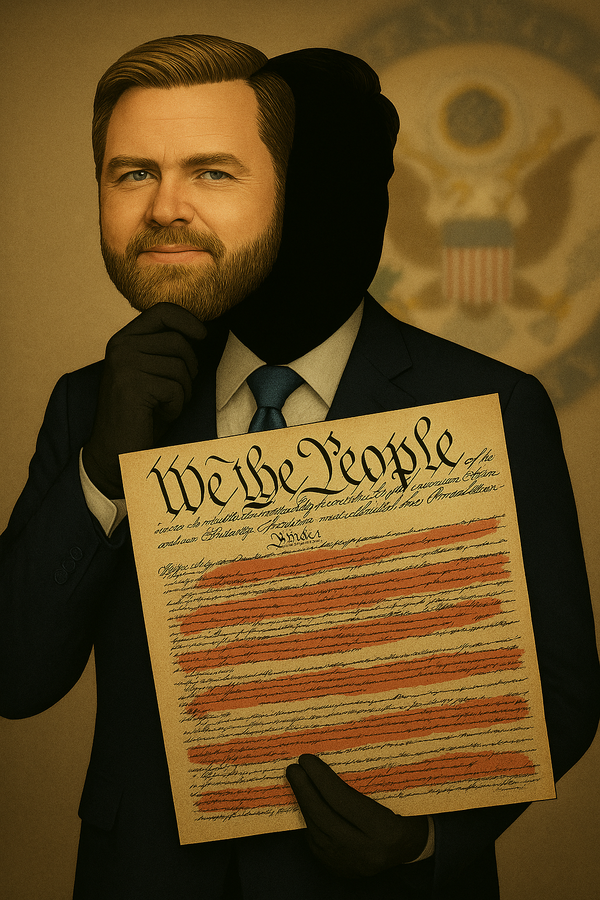
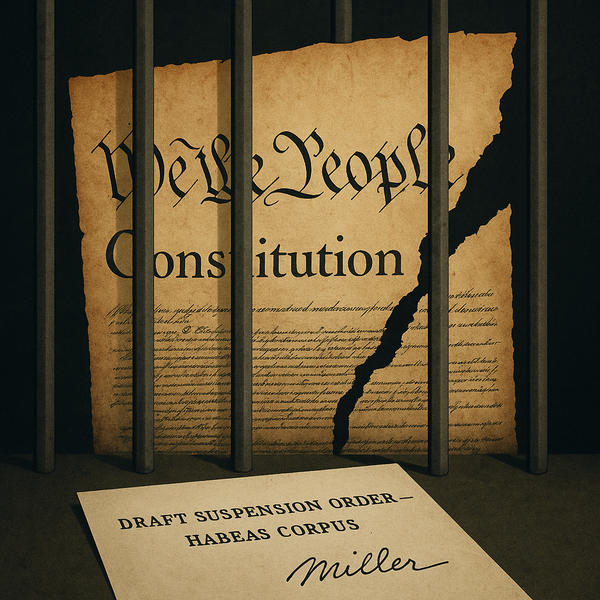
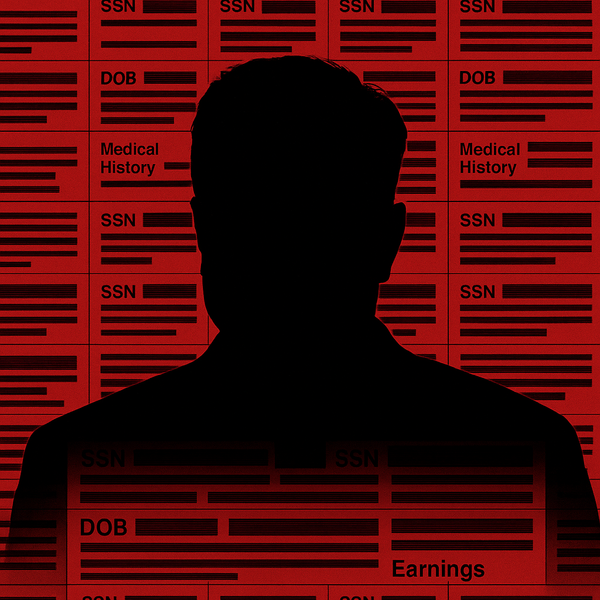
I remember what a real witch hunt looked like. Guilt without proof. Loyalty oaths. Lives destroyed for dissent. It’s happening again—with better tools.

Good evening.
There is a phrase that echoes through our public discourse today with troubling frequency: "witch hunt." It is invoked to describe investigations, to dismiss criticism, to paint those who question power as persecutors rather than citizens fulfilling their democratic duty.
The phrase has been drained of meaning through repetition, but for those of us who witnessed a genuine witch hunt in American governance, the comparison merits closer examination.
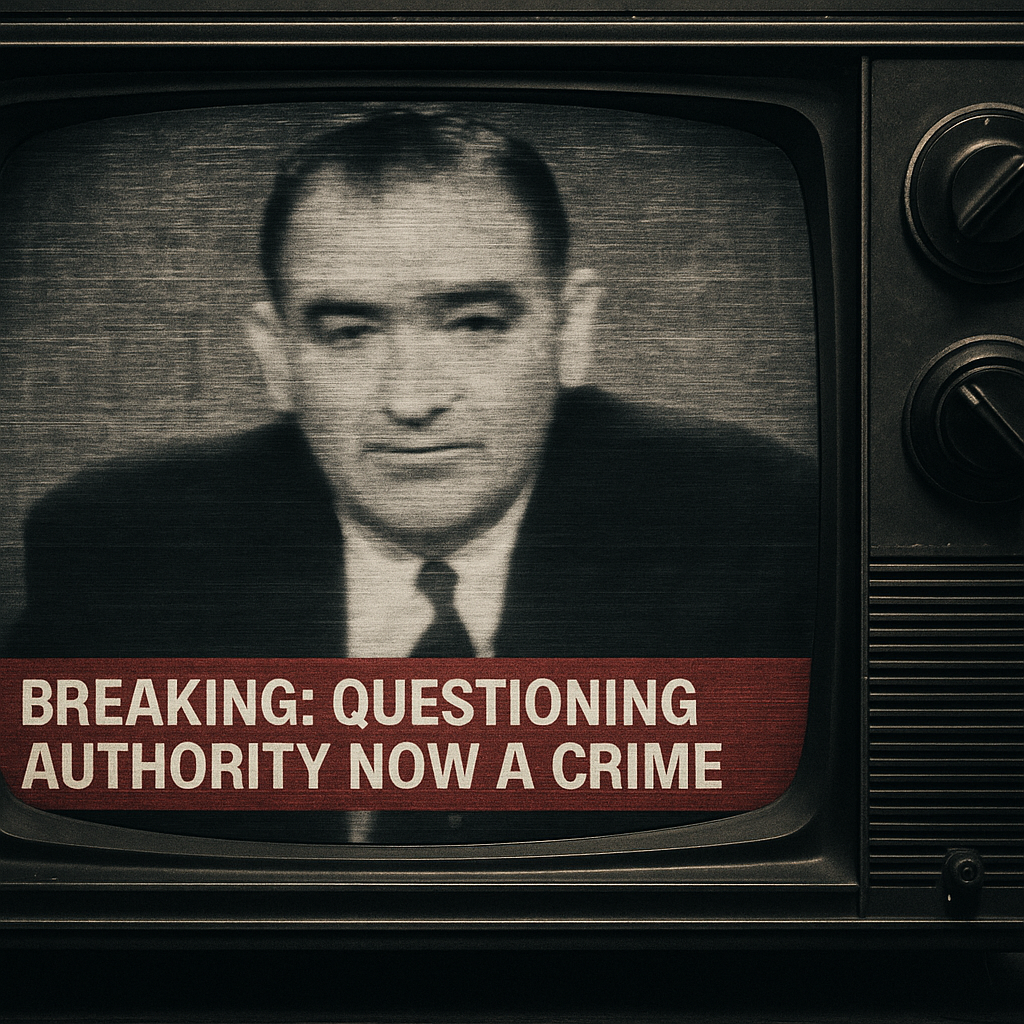
I remember February 1950, when a senator from Wisconsin rose in Wheeling, West Virginia, and claimed to hold in his hand a list of Communist Party members working in the State Department. The number on that list would change with each telling—205, then 57, then 81—but what remained constant was the accusation without evidence, the guilt by association, the demand that the accused prove a negative.
That was a witch hunt.
I remember State Department employees, military officers, and ordinary citizens called before congressional committees and asked, "Are you now or have you ever been a member of the Communist Party?"
Their answers mattered less than the spectacle of their summoning. Many lost jobs, reputations, and livelihoods not because evidence was presented against them, but because they had associated with the wrong people, read the wrong books, or voiced the wrong opinions.
That was a witch hunt.
I remember the loyalty oaths, the blacklists, the pressure on universities and industries to purge themselves of “suspect” individuals. I remember the fear that settled over ordinary conversations, the careful self-censorship that infected American life, as citizens worried that disagreement might be interpreted as disloyalty.
That was a witch hunt.
Today, the echoes of that era grow not fainter but louder. A president has issued at least eighteen executive orders affecting free speech and press, directing more than twenty federal agencies to enforce these measures.
We see journalists barred from the White House and Air Force One. We see regulatory investigations targeting media outlets that dare to criticize. We see Voice of America—a beacon of American values abroad for decades—shut down for perceived disloyalty.
When the Associated Press is banned from covering the administration, when the FCC initiates actions against television stations for their reporting, when networks are labeled "illegal" and subjected to regulatory assault, the machinery of state power is being deployed not to protect citizens but to silence criticism.
The accusations of “treason” against journalists who question policy or seek accountability are not mere rhetorical flourishes. They are calculated attempts to brand dissent as disloyalty, to transform the constitutionally protected work of the press into something sinister and dangerous.
When a president signs executive orders directing the Department of Justice to investigate former officials whose crime was criticism—like Chris Krebs, who affirmed the integrity of an election, or Miles Taylor, who anonymously raised concerns about presidential conduct—the parallel becomes impossible to ignore.
When security clearances become political weapons, when “disloyalty” replaces “subversion” as the unpardonable sin, when officials face investigation not for actions taken but for words spoken, we are witnessing not just the reconstruction of McCarthyism’s machinery but its enhancement with the full powers of the modern administrative state.
“They cry 'witch hunt' while wielding the pitchforks.”
The irony should not escape us that those now employing these tactics are the loudest to cry “witch hunt” when themselves subjected to scrutiny. Senator McCarthy, too, claimed persecution when questioned about his methods. Those who wield power arbitrarily have always portrayed accountability as persecution.
Let us be precise about what constitutes a witch hunt:
- It is not careful investigation based on evidence.
- It is not journalistic scrutiny of public figures.
- It is not legal proceedings that follow established rules of evidence and due process.
A witch hunt occurs when the powerful target the vulnerable for political gain, when accusation substitutes for evidence, when the machinery of government is deployed not to uncover wrongdoing but to silence dissent.
The danger in such moments is not merely to those directly targeted, though they suffer grievously.
The greater danger is to democracy itself.
For when criticism becomes criminalized, when dissent becomes dangerous, the feedback mechanisms that keep a democracy healthy begin to fail.
During the McCarthy era, too many remained silent for too long. Institutions bent to pressure rather than standing for principle. The Fourth Estate—with notable exceptions—amplified accusations rather than examining them. By the time Senator McCarthy was finally confronted, incalculable damage had been done.
Today, we face a new test.
When law firms representing political opponents are sanctioned, when universities are threatened with loss of federal funding for allowing certain viewpoints, when foreign students are arrested and expelled for participating in protests, we must recognize the pattern before us.
The question is whether we have learned the lessons of that earlier era—whether we can recognize the early warning signs of authoritarian impulse and stand against them before they become entrenched.
History does not repeat itself precisely, but it does rhyme—and the verses we are hearing now should sound familiar to those who remember.
Good night, and good luck.
Channeling Murrow’s voice for today’s America — not his words, but his principles.