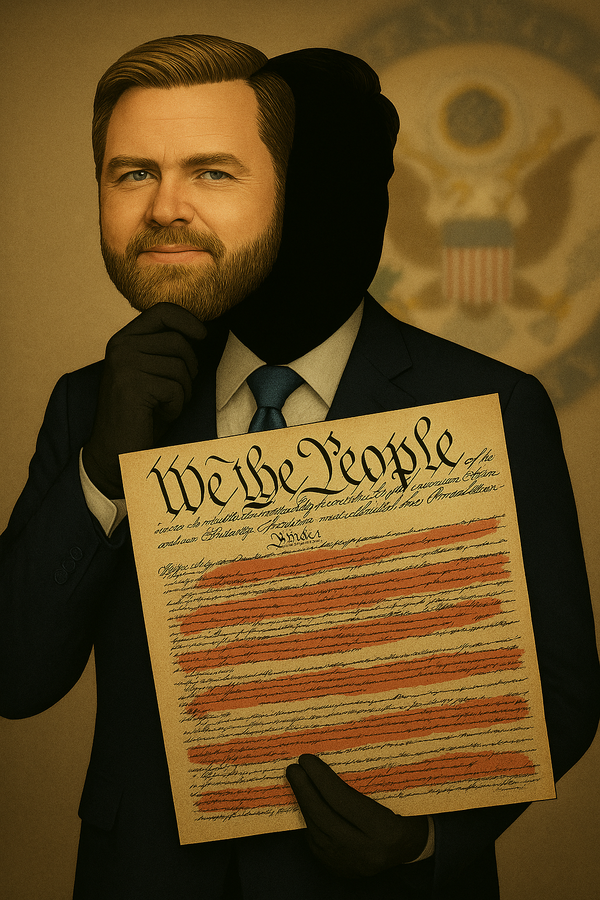
See It Now: Not an Invasion. Not a War. Not a Justification
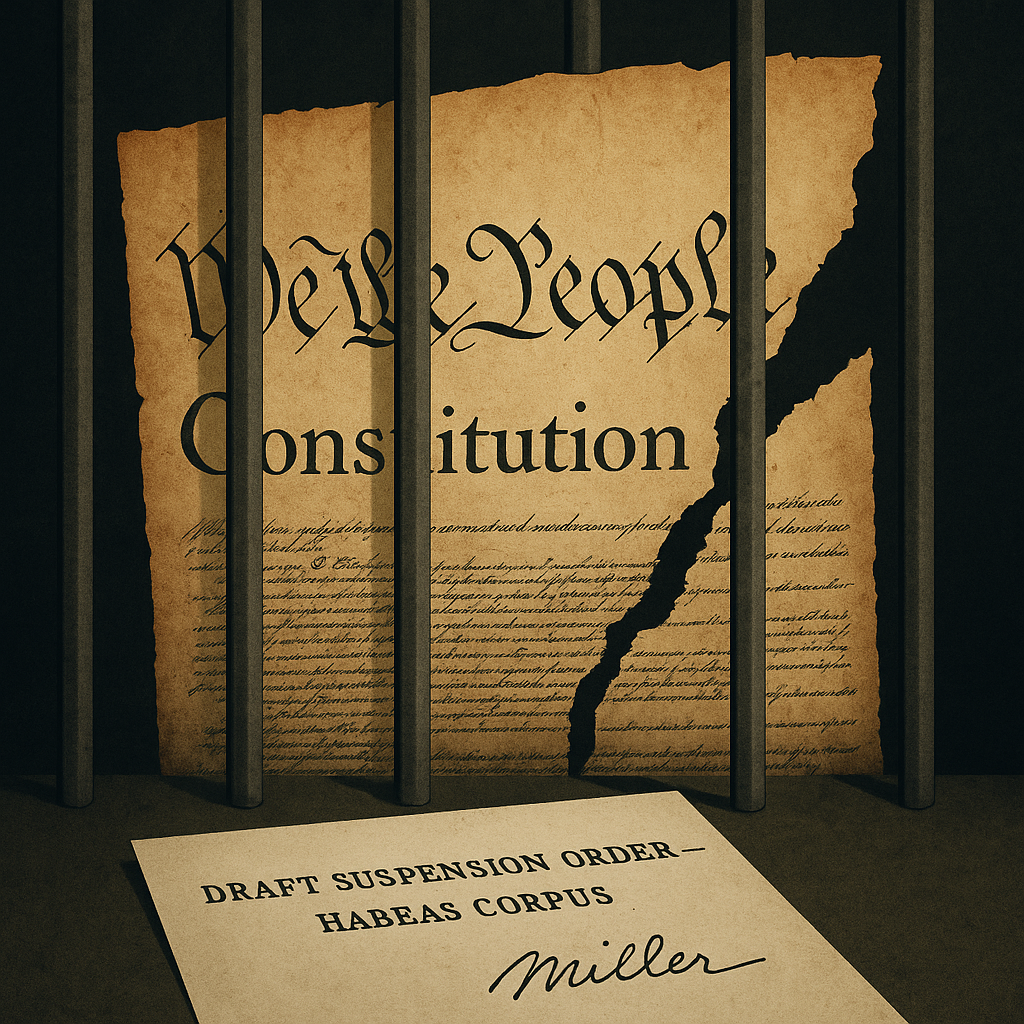
Stephen Miller’s call to suspend habeas corpus in response to immigration is not constitutional, not historical, and not acceptable. The rule of law is not optional.

Good evening.
Today, a senior White House adviser floated the idea of suspending one of the oldest pillars of Anglo-American law — habeas corpus.
Stephen Miller, the president’s deputy chief of staff, told a national audience the administration is “actively looking at” whether it can set aside the right of individuals — citizen or not — to challenge unlawful imprisonment.
He cited the Constitution. Let's look at what it actually says.
Article I, Section 9:
“The Privilege of the Writ of Habeas Corpus shall not be suspended, unless when in Cases of Rebellion or Invasion the public Safety may require it.”
That power resides in Article I — the domain of Congress. The Framers placed this exceptional authority not with the President, but with the legislature. It was no accident. They had seen what kings could do.
Miller claims we are under "invasion" — that undocumented migration qualifies.
No court has ever accepted that logic. Not in 245 years. Not during the Civil War. Not after Pearl Harbor. Not after 9/11.
Let’s be clear:
Asylum seekers are not enemy soldiers.
Children crossing deserts are not armed combatants.
A legal fiction does not make a legal fact.
The Constitution is not a toy chest for frustrated executives.
Then came the tell:
“A lot of it depends on whether the courts do the right thing.”
Translation: If the judiciary won’t bend, remove it from the equation.
That’s not governance. That’s threat.
It’s not about national defense. It’s about disabling review.
Let us remember what habeas corpus does:
It keeps the government from disappearing people.
It guarantees a hearing.
It is the final bulwark between liberty and a locked door.
It predates this country by five centuries. It endured the Tower of London, Fort Sumter, and Guantanamo Bay.
Now, it is spoken of as a nuisance — something to be waived away when courts do their job.
In Ex parte Milligan, the Supreme Court said:
“The Constitution of the United States is a law for rulers and people, equally in war and in peace.”
That was 1866. It remains true — unless we allow it to be forgotten.
This is not a debate about immigration. It is a question about power — and whether we still believe in limits.
The Constitution is not a menu. The presidency is not a monarchy.
And the courts are not rogue for doing what they were built to do.
Good night. And good luck.
Channeling Murrow’s voice for today’s America — not his words, but his principles.