This Is America: Will the Court Surrender Your Data?
The Supreme Court must decide if the Privacy Act still protects Americans—or if political appointees can seize Social Security data under the guise of efficiency. This isn’t modernization. It’s surveillance—and it may soon be irreversible.

Good evening.
The Supreme Court is not weighing a new law. It is weighing whether an old one still applies.
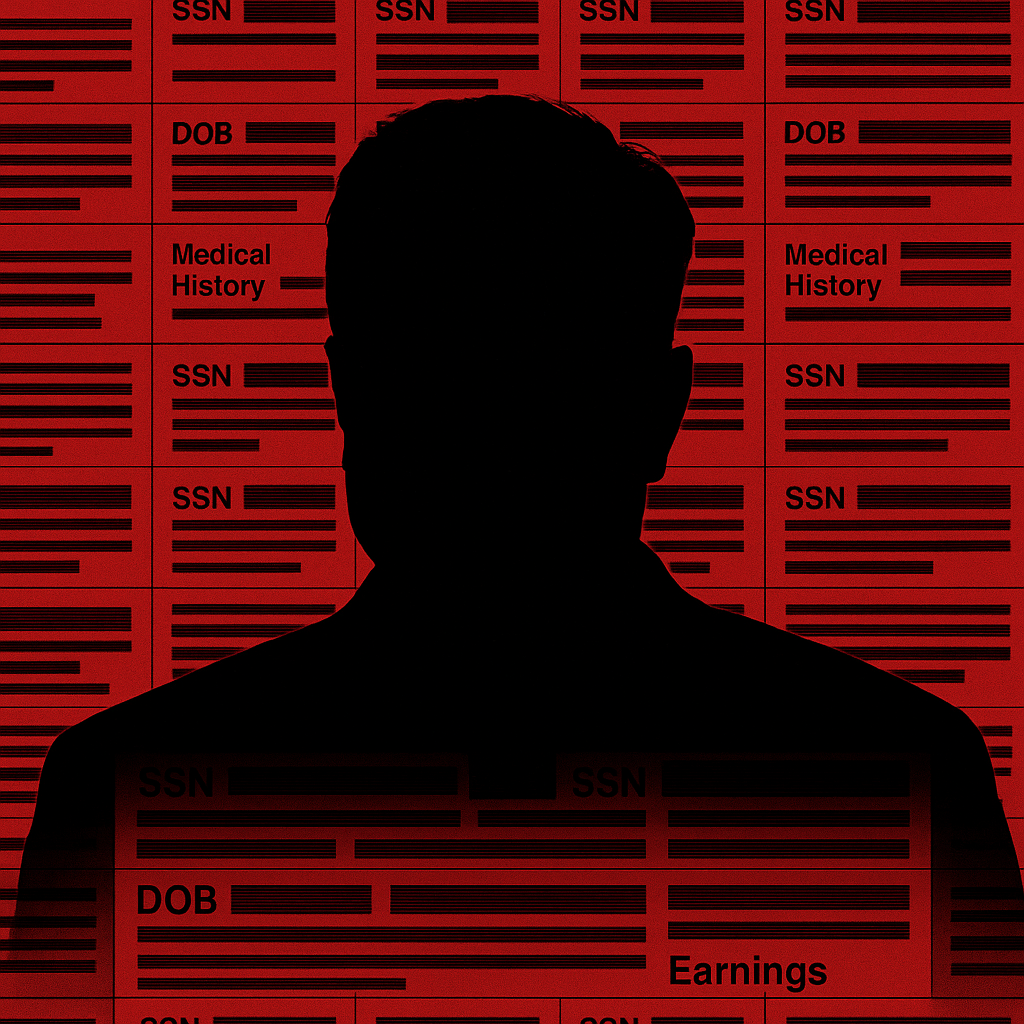
That law is the Privacy Act of 1974—enacted after Watergate to stop the government from collecting dossiers on its own people. It was clear. It was firm. It said federal agencies cannot hand over your personal data—your earnings, your medical history, your Social Security number—without consent or compelling legal basis.
The Trump administration, through an agency called the Department of Government Efficiency—DOGE—has asked the Court to sidestep that law. They want the Social Security Administration to grant full access to a database of extraordinary power. Lower courts said no. Twice. They called the request invasive, unlawful, and unnecessary. But the executive branch insists.
They claim urgency. They cite modernization. But urgency is not a constitutional principle. And modernization is not a blank check.
They argue the courts have overstepped—that judges have interfered with internal government operations. But these “operations” include handing sensitive data to political appointees under the leadership of a man who has blurred every ethical line in his path—and another who was not even born a U.S. citizen, yet now stands poised to unlock the private lives of 330 million Americans.
This is not governance. It is appropriation.
Elon Musk’s companies already intersect with government in contracts, satellites, and surveillance. Now his former agency seeks the crown jewel of federal data, under the thinnest of pretexts. Once this information is centralized, combined, and indexed—it can be sold, it can be searched, and it can be used.
Not just for fraud detection.
But for political suppression.
For profit.
For blackmail.
There is no credible reason to believe that this access, once granted, would be limited. There is every reason—every signal—to believe that it would not.
The lower courts ruled that the data DOGE needs can be anonymized. Redacted. As it has been for decades. The administration did not refute this. They simply said it wasn’t good enough.
That, too, is a tell.
Once data is merged, it cannot be unmerged. Once it is compromised, the damage is permanent. There is no “undo” button in a centralized surveillance system.
The Supreme Court is not reviewing whether DOGE’s task is important. It is reviewing whether the executive branch may override settled law, exploit a loophole, and seize access by sheer political force.
This is not a fight about modernization. This is a fight about whether the law means what it says.
A government that ignores rulemaking procedures, bypasses consent, and threatens whistleblowers is not fixing systems. It is probing for weakness.
If the Court accepts this appeal, it will not be validating a policy—it will be validating a breach. And when the next administration follows this precedent, and the next, there will be no firewall left between your private life and whoever holds power.
Good night, and good luck.
Channeling Murrow's voice for today's America — not his words, but his principles.